Where it all began
The Reggio Emilia approach was born from rubble and hope.
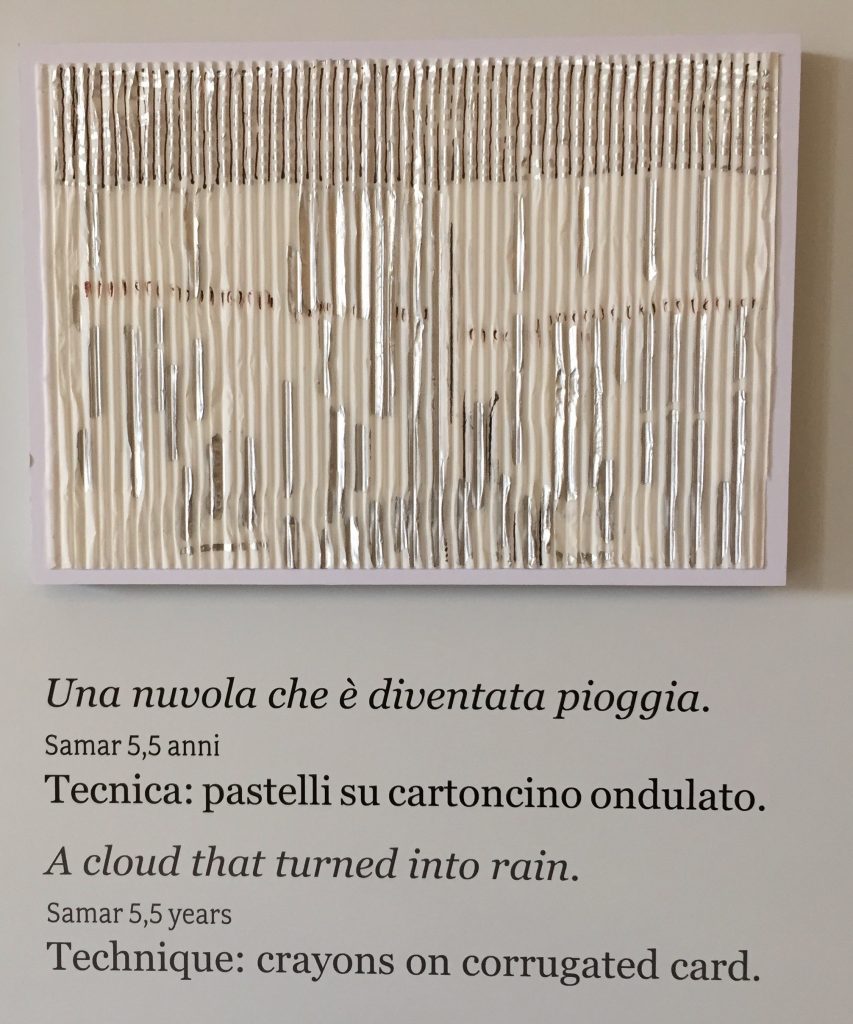
Visual metaphor in chidren’s learning processes Loris Malaguzzi International Centre, Reggio Emilia
© Preschools and Infant-toddler Centres – Istituzione of the Municipality of Reggio Emilia and Reggio Children
In the years after World War II, a group of parents in the farmlands surrounding Reggio Emilia, Italy, decided not to wait. Using materials salvaged from the ruins of war, they built a preschool with their own hands. Farmers and neighbours joined in. The school was built, managed and sustained by the community itself.
This act of collective determination caught the attention of a young teacher named Loris Malaguzzi, who joined the project in 1946 and dedicated his life to it until his death in 1994. What he helped create would go on to become one of the most influential educational philosophies in the world.
A different way of seeing children
At the heart of the Reggio Emilia approach is a radical idea: children are not empty vessels to be filled with knowledge. They are rights-bearing citizens, capable thinkers, and learners with what Malaguzzi called “a hundred languages” of expression, including drawing, movement, music, storytelling, and sculpture, alongside logic and language.
The role of educators is to listen carefully, to follow the child’s interests, and to offer materials, experiences and provocations that open new doors to learning.
One of Malaguzzi’s most distinctive contributions was placing an atelierista (a teacher with an artistic background) in every school, ensuring that poetic and metaphorical ways of thinking were as valued as rational ones. Documentation of children’s learning, made visible through carefully crafted displays, became central to the pedagogy and to the relationship between schools, families and the city.
In 1963, the Municipality of Reggio Emilia formally took over the running of the schools. Today, the city’s 21 preschools (ages 3 to 6) and 12 infant-toddler centres (ages 0 to 3) continue to evolve this living educational project. Each year, educators, researchers and practitioners from around the world travel to Reggio Emilia to attend study groups, visit the schools, explore the Loris Malaguzzi International Centre, and experience a city where children’s voices are genuinely valued.
One of the city’s most beloved resources is the Remida, a gallery-like creative recycling centre where schools, families and citizens source reclaimed materials to use in learning and making.
Why Reggio Emilia, why Samora Machel?

© Preschools and Infant-toddler Centres – Istituzione of the Municipality of Reggio Emilia and Reggio Children
The connection between Reggio Emilia and Southern Africa runs deeper than you might expect.
When Mzi Ndzuzo and Sbosh Mepeni visited Reggio Emilia, they discovered that the city had a long-standing bond with their part of the world. In the 1970s, Reggio Emilia was the first European city to sign a Memorandum of Understanding with the African National Congress. City officials shared with Mzi and Sbosh the story of Reggio Emilia’s solidarity with Samora Machel, first president of a liberated Mozambique, and with Oliver Tambo, first president of the ANC. The two visitors held a copy of that historic document in their hands.
The symbolic threads kept weaving. The main road running through their township? Oliver Tambo Drive.
Moved by what they saw in the municipal preschools and infant-toddler centres, and inspired by this unexpected historical kinship, Mzi and Sbosh returned home with a clear conviction: the Reggio Emilia approach belonged in Samora Machel. Not as an import, but as a homecoming.